It can be scary when we start noticing when our friends aren’t feeling well. It can be uncomfortable to talk to a friend about their drug use or mental health, but you can make a difference. Being there and showing that you care can make all the difference to someone.
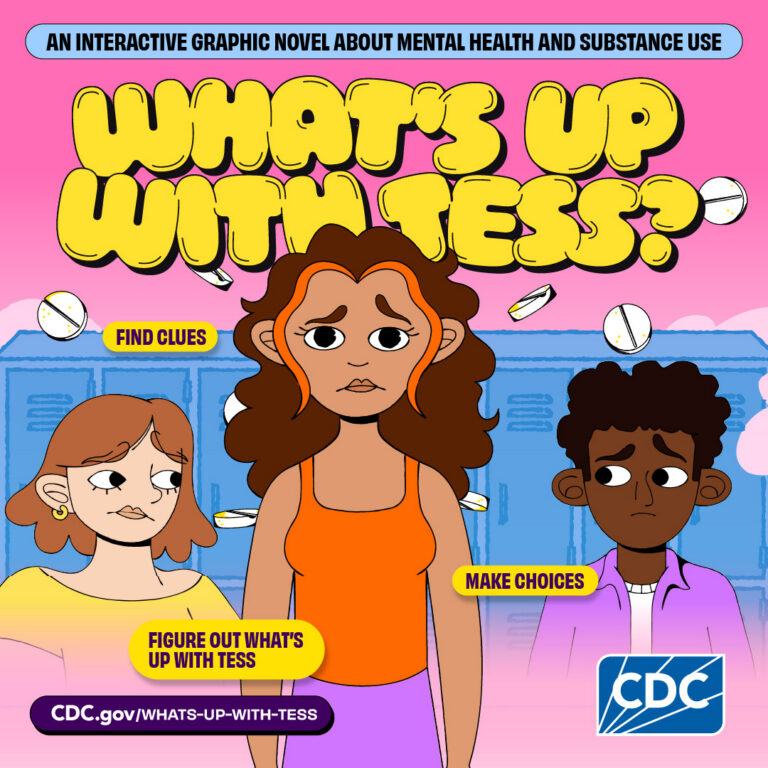
what's up with Tess?
Check out this graphic novel by the CDC that tells the story of your friend Tess. She hasn’t been herself lately. Is it mental health? Substance use? Find clues, make choices and see if you and your friends can get to the bottom of what’s bothering her. Click here to explore more!
Tips for Talking to a Friend
Get Ready
While we can't control how your friend will react, there are things you can do to make the conversation easier. Think about what you want to say, write down what you want to say, and go slow.
Active Listening
Listen to understand and not to respond. Give your friend your full focus. You can ask questions that help you check your understanding.
- "So what your saying is..."
- "Can you tell me more about..."
- "When you said ___ , what do you mean by that?"
Be Mindful of Body Language
People's body language can say a lot. If your arms are crossed or you're looking at someone funny, it could come off as judging. Try to make sure your body language is neutral
Ask Open-Ended Questions
Open-ended questions allow for a longer response and are not a simple "yes or no" question. These questions usually start with "how," "why," or "what." Some examples include:
- "What are you feeling right now?"
- "How would you like things to be different?"
- "What has helped you feel better in the past?"
A big part of supporting someone is just to be there. Think hanging out with your friend to ‘do nothing together’. If your friend is going through it and they don’t feel like doing anything, offering to be a safe space is already doing a lot for them. You can always share concern in a gentle way and listen to what they have to say. They might not want to talk right away but keep reminding them that you are willing to listen whenever they want to talk. Remember you are not there to fix their problems! But you can help them by encouraging them to come up with their own goals and plans.
What will help?
Listen without telling your friend how to fix it. Try encouraging them to come up with solutions:
“What do you want to do right now?”
“You said you want help, do you want us to look for treatment options?”
“What’s our next step?”
“Is there someone, like parent or teacher, that you feel safe talking to?
Don’t make decisions without their consent. It can be dehumanizing to feel that their own decisions don’t matter. Try to come up with a plan together.
Don’t ghost, ignore, or avoid them. It’s okay to step back when you need to. It’s important to set up boundaries that protect you as well. Set up reasonable expectations and follow up when you can.
Funding for this campaign was made possible (in part) by the Centers for Disease Control and Prevention through the Overdose Data to Action: Limiting Overdose through Collaborative Actions in Localities (OD2A:LOCAL) grant. The views expressed in materials, publications, or by partners, do not necessarily reflect the official policies of the Department of Health and Human Services, nor does the mention of trade names, commercial practices, or organizations imply endorsement by the U.S. Government.